The Divine Teacher, Protector, and Symbol of Eternal Love
Lord Krishna is one of the most worshipped and influential deities in Hinduism. Revered as the eighth incarnation of Lord Vishnu, Krishna represents divine love, wisdom, courage, and the art of living a balanced life. From his playful childhood in Vrindavan to his role as a statesman in Mathura and Dwarka, and finally as the supreme teacher of the Bhagavad Gita, Lord Krishna’s life offers timeless guidance for humanity.
For devotees, Krishna is not only a god but a friend, guide, philosopher, and protector. His teachings transcend religion and time, making him deeply relevant even in the modern world.
This article presents a complete, SEO-friendly overview of Lord Krishna, covering his life, symbolism, teachings, and spiritual significance.
Who Is Lord Krishna?
Lord Krishna is believed to be the eighth avatar of Lord Vishnu, born on earth to restore dharma and eliminate evil. He was born in the Dvapara Yuga, during a time of great moral and political chaos.
Krishna is worshipped in many forms: as a mischievous child (Bal Krishna), a divine lover (Radha Krishna), a wise king, ferocious warrior and the supreme spiritual teacher. This multi-dimensional nature makes him unique among Hindu deities.
Unlike ascetic gods, Krishna lived fully in the world while remaining detached from it. This balance between worldly duty and spiritual awareness is central to his message.
Birth of Lord Krishna
Lord Krishna was born in Mathura to Devaki and Vasudeva. His birth took place in a prison, as his maternal uncle Kansa had imprisoned his parents due to a prophecy that Devaki’s eighth son would cause his death.
On the night of Krishna Janmashtami, Vasudeva carried the newborn Krishna across the Yamuna River to Gokul, where he was raised by Nanda and Yashoda. This divine escape symbolizes the triumph of good over evil and divine protection.
Krishna’s birth is celebrated every year as Krishna Janmashtami, one of the most important Hindu festivals.
Childhood and Leelas of Krishna
Krishna’s childhood in Gokul and Vrindavan is filled with divine leelas, or playful miracles. As a child, he stole butter, played pranks, and charmed everyone with his innocence. Yet, even in childhood, he displayed divine power by lifting the Govardhan Hill to protect villagers from torrential rains.
He defeated powerful demons sent by Kansa, showing that divine grace can appear in the most gentle forms. These stories teach that strength does not always need aggression and that joy itself can be divine.
Krishna’s flute represents the call of the divine that draws souls toward spiritual awakening.
Radha and Krishna: Symbol of Divine Love
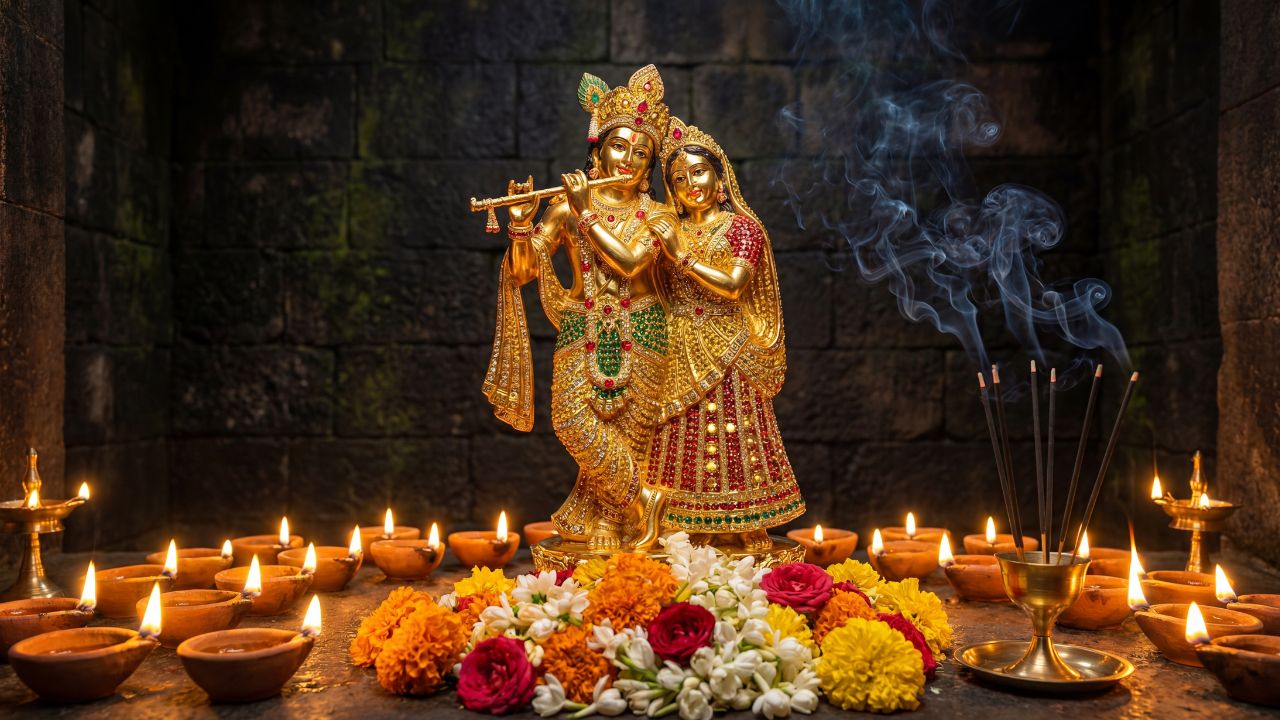
The relationship between Krishna and Radha is one of the most celebrated aspects of his life. Radha represents the human soul, while Krishna represents the divine. Their love is not merely romantic but deeply spiritual.
Through Radha and Krishna, Hindu philosophy explains bhakti, or devotion. It teaches that complete surrender and love for the divine lead to liberation. Their bond continues to inspire art, poetry, music, and devotion across centuries.
Krishna as a Warrior and King
As he grew older, Krishna moved to Mathura and later established his kingdom in Dwarka. Though a king, he never sought power for ego. Instead, he ruled with wisdom, diplomacy, and compassion.
Krishna played a key role in the Mahabharat, not as a warrior, but as a guide and strategist. His role proves that true strength lies in intelligence and righteous action rather than brute force.
The Bhagavad Gita and Teachings of Krishna
The most profound contribution of Lord Krishna to humanity is the Bhagavad Gita. Delivered on the battlefield of Kurukshetra to Arjuna, the Gita addresses the core dilemmas of human life.
Krishna teaches:
- Perform your duty without attachment to results
- Surrender actions to the divine
- Balance karma (action), bhakti (devotion), and jnana (knowledge)
- See the soul as eternal
These teachings are practical and deeply philosophical, offering guidance on how to live a meaningful and ethical life.
Symbolism of Lord Krishna
Every aspect of Krishna’s form carries deep meaning:
- Flute: The soul that becomes hollow through ego-less living allows divine music to flow
- Peacock Feather: Beauty, grace, and connection with nature
- Blue Skin: Infinity, depth, and the vastness of consciousness
- Smile: Divine reassurance and compassion
Krishna teaches through example rather than command, making his symbolism both subtle and powerful.
Worship of Lord Krishna
Lord Krishna is worshipped in homes and temples across India and the world. Major centers of Krishna devotion include Vrindavan, Mathura, and Dwarka.
Devotees chant his name, sing bhajans, and read the Bhagavad Gita. Popular mantras include:
- Hare Krishna Hare Rama
- Om Namo Bhagavate Vasudevaya
Krishna bhakti emphasizes love, surrender, and joy rather than fear or rigid ritual.
Festivals Dedicated to Lord Krishna
Krishna Janmashtami celebrates his birth with fasting, midnight prayers, and reenactments of his life. Holi is also strongly associated with Krishna, symbolizing joy, color, and divine playfulness.
Rath Yatra, especially in Puri, celebrates Krishna as Jagannath, the lord of the universe. These festivals strengthen community bonds and spiritual devotion.
Relevance of Lord Krishna in Modern Life
In a world full of stress, competition, and confusion, Krishna’s teachings offer clarity. He teaches how to act responsibly without becoming mentally burdened by outcomes.
Krishna encourages self-awareness, emotional balance, and ethical living. His message reminds people that success without inner peace is incomplete.
For many, Krishna is a friend who listens, a guide who advises, and a protector who reassures.
Why Lord Krishna Is Universally Loved
Krishna’s charm lies in his completeness. He is playful yet profound, loving yet firm, worldly yet detached. He accepts devotees as they are and guides them gently toward growth.
This universality makes Krishna relevant beyond religion, appealing to seekers, philosophers, artists, and everyday people alike.
Lord Krishna is not just a figure from ancient scriptures but a living source of wisdom and inspiration. His life teaches that spirituality does not require withdrawal from the world but conscious engagement with it.
Through love, duty, wisdom, and surrender, Krishna shows a path that leads to peace and fulfillment. Remembering Krishna is remembering the possibility of living joyfully, wisely, and fearlessly.
In every age, Lord Krishna remains the eternal guide of humanity.